
Help the people you love stay safe at home for longer.
Signal Homecare uses small, discreet sensors to notice changes in daily routines and quietly let you know when something seems different. No cameras. No microphones. Just quiet reassurance.
Or speak to one of us on 01228 807270 (Monday to Friday, 9am to 5pm)

You start to notice small things
It rarely happens all at once. It's the small shifts that stay with you.
The kettle that used to be on by seven. The curtains that stay closed a little longer than they used to. The heating that wasn't turned on, even though it was cold. The phone call where something just didn't sound quite right.
You might not be able to name exactly what's changed. But you feel it. A quiet worry that sits with you after every visit, every phone call. You don't want to overreact, but you don't want to miss something either.
Signal Homecare was built for exactly this moment. Not for emergencies. For the space between "everything's fine" and "I wish I'd known sooner."
How Signal Homecare works
Three simple steps. No complexity, no fuss.
We learn the routine
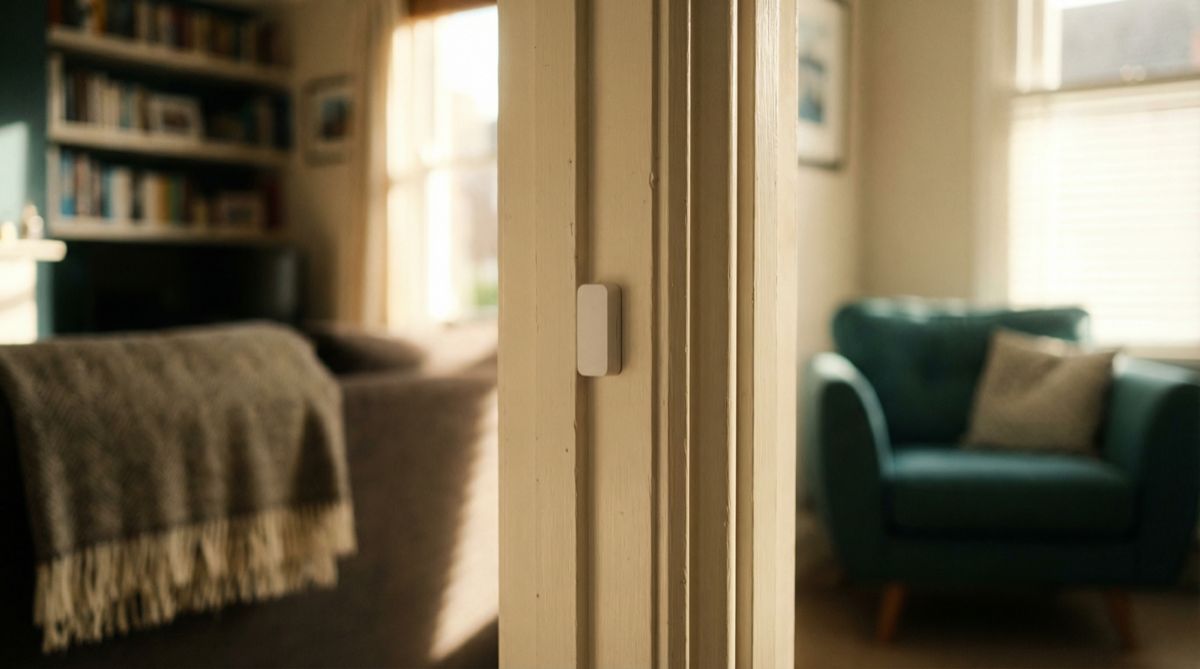
Small, discreet sensors are placed around the home. Over a couple of weeks, Signal Homecare quietly learns the natural rhythm of the day: when the kettle goes on, when doors open and close, when the television goes on.
Signal Homecare notices changes
If patterns start to shift (the kettle isn't used by its usual time, there's less movement than normal, the heating hasn't come on), Signal Homecare picks up on it. Softly and without fuss.
Family gets a heads-up
You receive a gentle notification, not an alarm, not a siren. A calm heads-up that something might be worth checking on. Then you decide what to do next.
The everyday things Signal Homecare pays attention to
Signal Homecare doesn't track people. It notices the rhythms of daily life.
- Kettle and appliance use
- The kettle going on in the morning can say a lot. Signal Homecare notices whether the everyday things are being used as usual.
- Front door activity
- A morning walk, a visitor, the milk being brought in. A door that stays closed all day when it normally wouldn't is worth knowing about.
- Movement around the home
- Not where someone is standing, but whether there's the usual level of activity. Less movement than normal can quietly highlight a change.
- Room temperature
- A home that's too cold or too warm can be a concern, especially in winter. Signal Homecare keeps a quiet eye on the heating.
- Bathroom presence
- If someone has been in there longer than usual, particularly overnight when most toileting-related falls happen. No camera, no microphone.
Why no cameras?
Because Mum or Dad's home is their home. Not a facility. Not a ward. Their home.
Cameras change how a space feels. Even if no one's watching the feed, the knowledge that they could is enough to turn a place of comfort into a place of observation.
Signal Homecare knows the kettle was used. Not what someone was wearing when they made their tea. It knows the front door opened. Not who was standing there.
That's the difference between care and surveillance.
What Signal Homecare means for your family
You can't be there every moment. But you can stay connected, without hovering.

For you
-
Peace of mind
That quiet reassurance from knowing the day has started normally. The kettle's been on. There's been movement. Things seem alright.
-
Earlier awareness
Gradual changes are hard to spot from a distance. Signal Homecare highlights shifts in routine before they become bigger concerns.
-
No more wondering
No more driving over because the phone rang out. Signal Homecare helps fill the gaps between visits with real information, not guesswork.
For the person at home
-
Home stays home
No cameras, no blinking lights, no wearables. The sensors are small and discreet. The home still feels like home.
-
Dignity preserved
No feeling of being watched. No awkwardness. Privacy is built in from the start. Your loved one just carries on with their day.
-
Nothing to wear, charge, or press
Signal Homecare works in the background. There's no behaviour change needed. Life carries on exactly as it always has.
Families like yours
These are some of the situations where Signal Homecare can help.
Quietly serious about the technical side
The signals are small and ordinary. The system behind them isn't. It's encrypted, secured, and only ever visible to the people you choose.
Built by people who understand
Signal Homecare was created by two friends who saw a gap between worry and action.
Signal Homecare was founded by Andrew Taylor and Ricky Beaty, long-time friends with a shared belief that technology should serve people, not complicate their lives.
Both are of an age where their own parents are getting older. And both know many friends and family members who are caring for older or vulnerable adults who, quite understandably, want to stay in their own homes.
Andrew has spent his entire career in education and healthcare technology, building products that make a real difference in people's lives. Ricky brings deep experience in cloud infrastructure, hosting, and home-care technology, the kind of hands-on technical knowledge that makes a system like Signal Homecare reliable, secure, and resilient.
Together, they're building Signal Homecare because they believe that the space between "everything is fine" and "we need to do something" deserves a better answer than cameras, panic buttons, or waiting for a crisis.

Be one of the first families to try Signal Homecare
We're inviting the first few families to help us shape Signal Homecare during our beta. The full system is supplied, supported, and completely free, for as long as you'd like to keep using it.
Talk to usGet in touch
Tell us a little about your situation and we'll be in touch for a friendly conversation about whether Signal Homecare could work for your family.
Thank you for getting in touch.
We've received your message and will be in touch soon. Our support hours are Monday to Friday, 9am to 5pm.